Casa de Campo Real Estate Market — Pricing, Demand & Outlook
Casa de Campo Resort holds a unique position in the Caribbean luxury market. Roughly 7,000 acres, fully gated, fixed inventory, and almost five decades of brand equity behind it. This overview explains how the market is structured today — pricing by segment, what drives demand, where inventory comes from, and how Casa de Campo compares to other Caribbean buyer markets. For property-specific pricing or a current list of available villas, contact our team.
Entry Tier — Under $1.5M
Garden-view and inland neighborhoods. Typically smaller lots, older construction, or units in townhome-style developments. The accessible entry into Casa de Campo ownership — same resort access, lower carrying cost. Inventory turns over more frequently here than in the higher tiers.
Mid Market — $1.5M to $5M
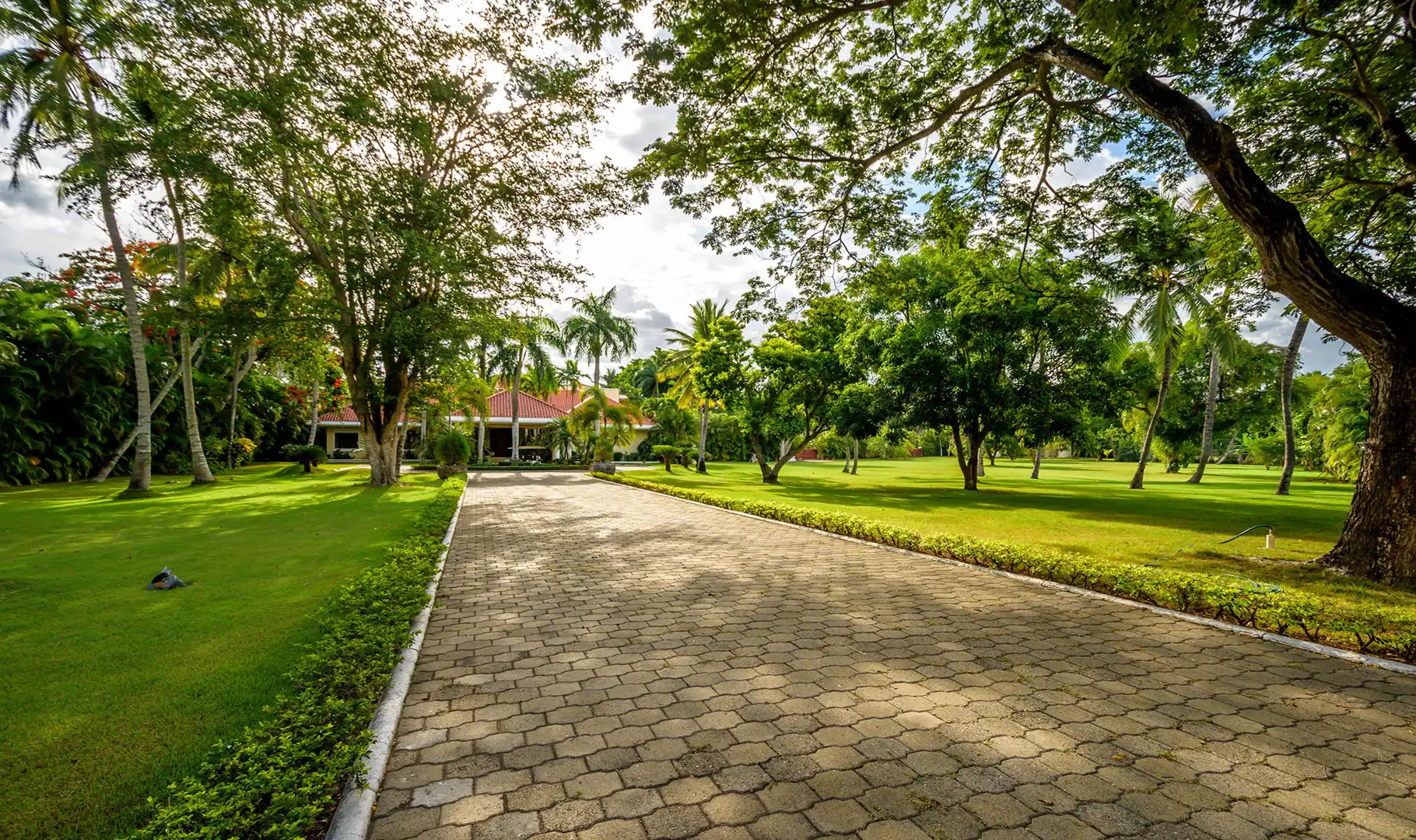
Golf-view villas, marina-adjacent properties, and mid-sized lots. The largest active segment by volume. New construction and renovated older villas compete here. Strong demand from second-home buyers and investors running rental programs.
Luxury & Estate — $5M+
Oceanfront, beachfront, and premier estate lots. Punta Minitas, Barranca, Punta Aguila. Thinly traded — much of this inventory sells off-market through agent networks. Property assessments often reach $10M+, with named estates well above that.
What Makes the Casa de Campo Market Unique
A few structural factors set Casa de Campo apart from other Caribbean real estate markets:
- Fixed land area. The resort is fully built out within its 7,000-acre boundary — no significant new tracts will come online. New inventory comes from infill construction, renovation, and resale, not master-planned expansion.
- Closed community. Gated, with 24-hour security, private utilities infrastructure, and resort-managed common areas. Owners are buying into both a property and the resort’s operating model.
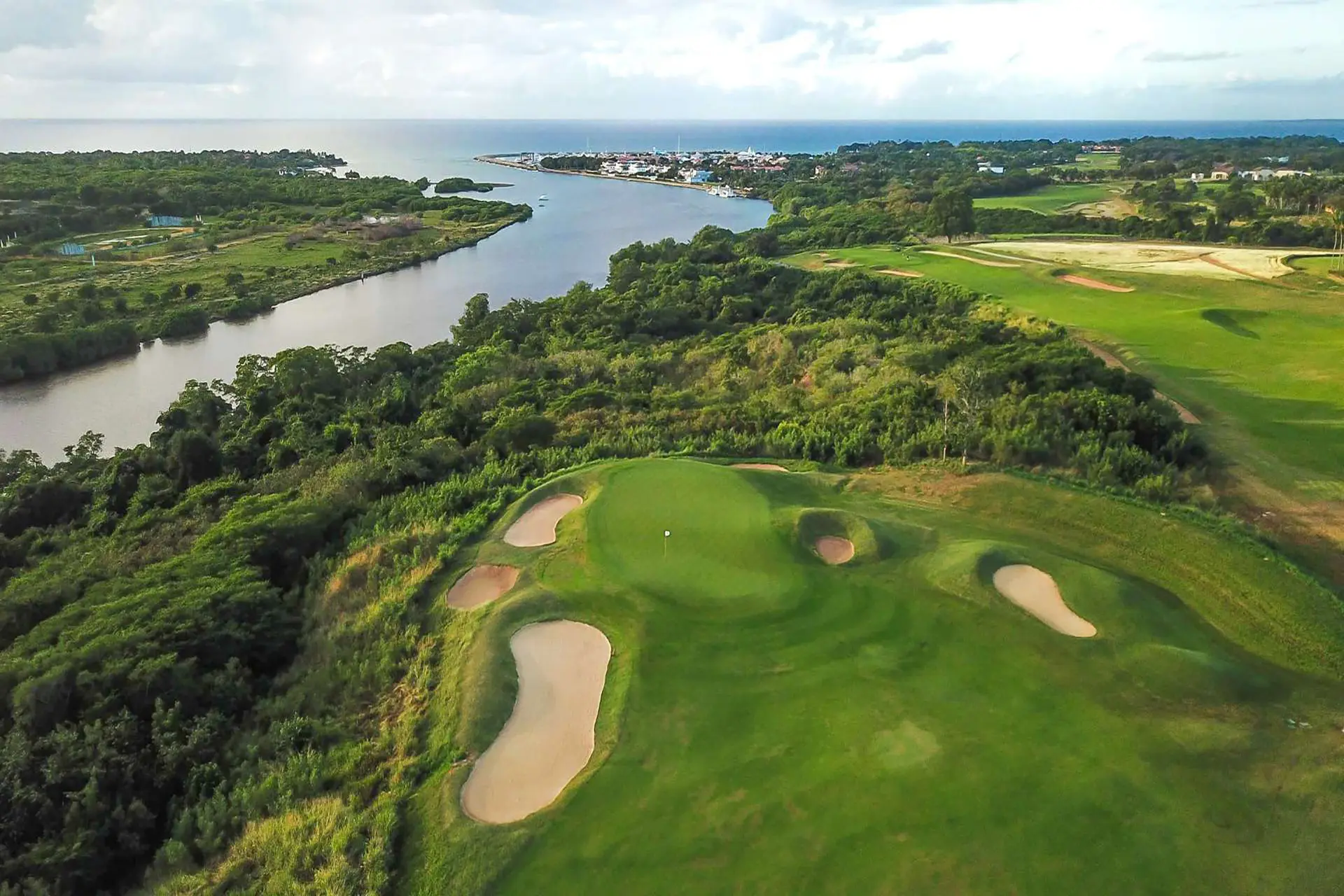
- Brand longevity. Casa de Campo has been an established luxury destination since the 1970s. Repeat buyers, multi-generational ownership, and famous-name owners support price stability across cycles. The Teeth of the Dog golf course — long rated #1 in the Caribbean — was recently restored by Jerry Pate Design, preserving Pete Dye’s original layout and reinforcing the resort’s flagship amenity for the next generation of owners.
- Caribbean access. La Romana International Airport sits inside the resort with direct flights from Miami, New York, Toronto, and major European hubs. The drive from Santo Domingo airport is about 90 minutes.
- Currency dynamic. Properties trade in USD, but operating costs (labor, materials, taxes) are largely in Dominican pesos. A favorable peso/USD exchange can lower the real cost of carrying a property over time.
Pricing Segments in Detail
The Casa de Campo market segments cleanly along property type and location within the resort. Approximate ranges (current within a typical market cycle — request a live comparison for any specific property):
- Garden-view villas: $500K–$1.5M. Smaller lots, often inland. Most accessible entry point into ownership.
- Townhomes and condos at the Marina: $700K–$2M. Lock-and-leave format, walking distance to restaurants and the yacht club.
- Golf-view villas: $1.5M–$4M. Direct frontage on Teeth of the Dog, Dye Fore, or The Links. Strong rental income potential.
- Ocean-view villas (not direct frontage): $2M–$5M. Elevated lots with sea views without the beachfront premium.
- Oceanfront and beachfront estates: $5M–$15M+. Punta Minitas, Barranca, Punta Aguila. Direct beach or cliffside ocean access. Rare and tightly held.
- Named estate properties: $15M and above. Larger compounds, signature architecture, often sold quietly through agent networks rather than public listings.
Demand Drivers — Who Buys at Casa de Campo
Buyer composition has shifted gradually over the past decade, but the major sources of demand are well established:
- US buyers. Historically the largest cohort — primarily from the Northeast (NYC metro), Florida, and increasingly Texas. Direct flights and the Dominican Republic’s tax structure for foreign owners drive this segment.
- European buyers. A meaningful and growing share — Spanish, Italian, French, German, Swiss. Frequent flyers via Madrid and Frankfurt connections to Punta Cana or Santo Domingo, then on to Casa de Campo.
- Dominican and regional buyers. A substantial domestic ownership base. Many Dominican family compounds have been at Casa de Campo for multiple generations.
- Canadian buyers. Smaller but steady cohort, often via Toronto-La Romana direct seasonal service.
- Investment-focused buyers. A subset across all geographies focused on rental income and capital appreciation. Casa de Campo’s established short-term rental market (managed pools, name recognition with travelers) supports this strategy.
Supply Dynamics — How Inventory Reaches the Market
Casa de Campo inventory does not behave like a typical resort market. A few patterns to understand before searching:
- Public listings are a partial view. A meaningful share of transactions — particularly in the $5M+ segment — happen off-market through agent relationships before reaching listing platforms.
- New construction is constrained. The resort is fully platted; new builds are infill on existing lots or replacement of older structures. There is no large pipeline of new oceanfront inventory coming online.
- Long-tenured ownership keeps inventory tight. A meaningful portion of properties pass within families across generations rather than reaching the open market, contributing to limited listing turnover in the most established neighborhoods.
- Renovation pipeline. Older villas being renovated and resold by investor-owners is a meaningful supply stream in the mid-market segment.
The practical implication: working with a local agent matters more here than in markets where inventory is fully transparent on portals.
Investment Outlook and Rental Market
Buyers evaluating Casa de Campo as an investment property should weigh three factors:
- Rental income potential. Casa de Campo has an established short-term rental market — visitors come for the golf, the beach, and resort access. Managed rental pools through the resort and through independent operators like Caribbean Paradise Homes generate occupancy across seasons. High-season (December–April) drives the majority of annual revenue.
- Appreciation. The resort’s brand longevity and fixed inventory have historically supported steady appreciation, with stronger gains in the oceanfront and golf-view segments where supply is constrained. Past performance is not indicative — buyers should not treat appreciation as guaranteed.
- Operating economics. The Dominican Republic’s tax structure (10% on rental income, 1% IPI above the exemption, no capital gains for foreign individuals in many cases) is favorable relative to many Caribbean alternatives. Confirm specifics with a Dominican tax advisor for your situation.
How Casa de Campo Compares to Other Caribbean Markets
A practical comparison for buyers also looking at Punta Cana, Cap Cana, Tortola, St. Barts, or the Cayman Islands:
- vs. Punta Cana and Cap Cana — both are larger, newer, more master-planned. More inventory at lower entry points, but less established brand prestige and more dilution at the top end.
- vs. Cayman Islands and Turks & Caicos — those markets carry premium pricing per square foot and stricter foreign ownership rules. Casa de Campo offers comparable luxury at lower price points with no foreign ownership restrictions.
- vs. St. Barts — different market entirely. St. Barts trades at significantly higher per-square-foot pricing in a much smaller, more isolated market. Casa de Campo offers larger lots, more amenities, and easier access for the typical US/European buyer.
- vs. Puerto Rico (Dorado, Bahia Beach) — comparable in lifestyle and price band, with the Puerto Rico tax incentive (Act 60) as an offset for US-residency buyers. Casa de Campo competes on brand depth, golf, and Caribbean position.
Get Current Pricing for the Property You're Considering
This overview is structural — durable facts about the market. For current asking prices, recent comparable sales, off-market inventory, or a property-specific valuation, you need a live conversation with a local agent who is working the market today.
Caribbean Paradise Homes has represented buyers and sellers at Casa de Campo for over two decades. We can pull current comparables, give you a price-realism check on any specific property, and access off-market inventory in your target neighborhood and budget.