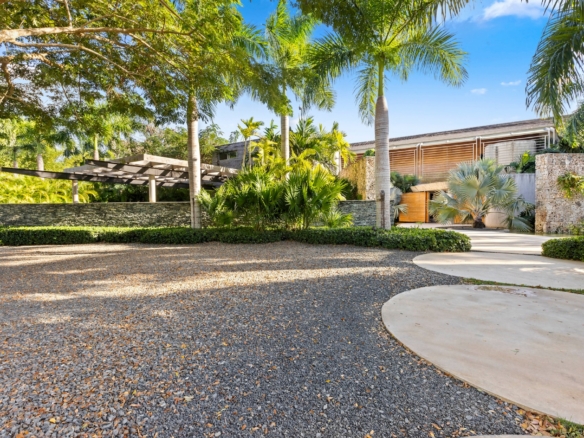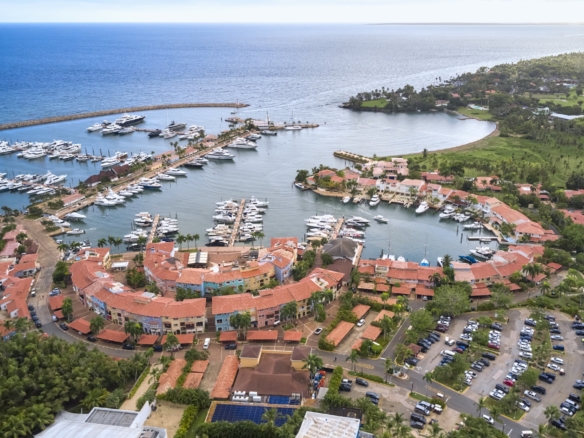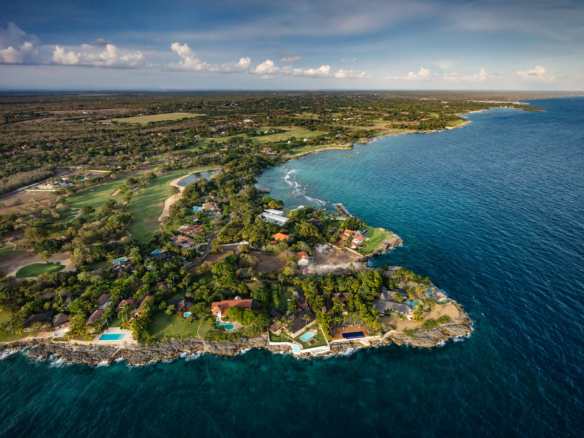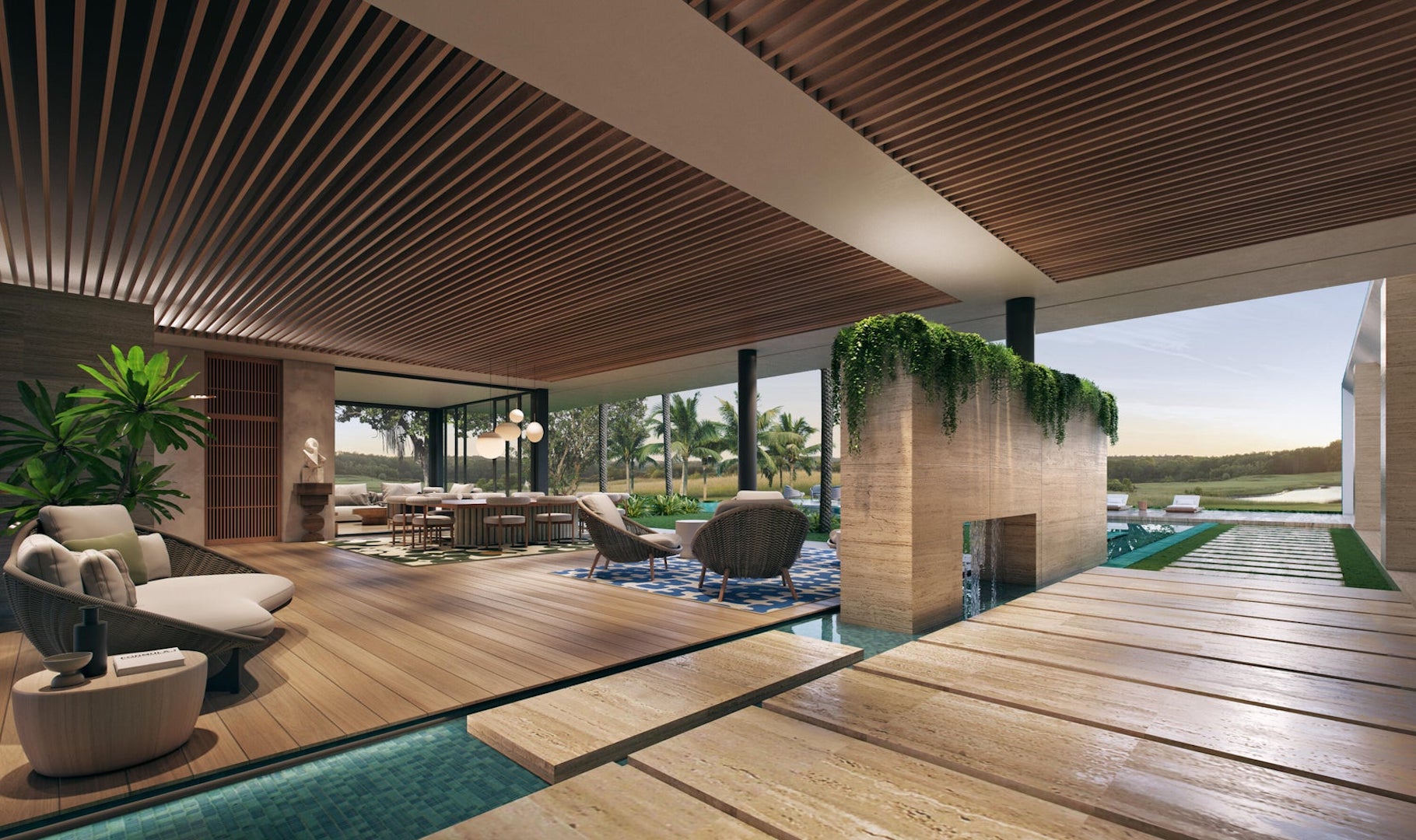
Casa de Campo is the Caribbean’s most established luxury residential resort — 7,000 acres of private gated community on the southeast coast of the Dominican Republic, anchored by three Pete Dye-designed golf courses, a deep-water marina, and over 1,700 privately owned villas. For international buyers, it has become a benchmark for what a second home in the region can look like: full freehold ownership, professional security, a self-contained ecosystem, and a 10-minute drive to La Romana International Airport (LRM).
If you’re researching what it actually takes to buy here, this guide walks you through the entire process — from making an offer to receiving your registered title — along with the costs, the legal framework, and the realities you should understand before signing anything.
Why International Buyers Choose Casa de Campo
The community has been operating since 1974, which matters when you’re buying real estate in an emerging market. Roads, water, power, fiber, drainage, and security infrastructure are already built and maintained by the resort. Property values have appreciated steadily for two decades, supported by genuine demand from owners who actually use the homes — not speculative inventory.
Buyers we work with typically cite four reasons for choosing Casa de Campo over other Caribbean destinations:
- Security. Single-entry resort with 24/7 perimeter and roving security. Owners feel comfortable leaving homes vacant for months.
- Infrastructure. Reliable utilities, paved roads, fiber internet, and a private resort airport.
- Liquidity. A real resale market exists. Villas trade. You’re not buying into a thin, untested market.
- Use. Three golf courses, a beach club at Minitas, a marina, equestrian center, polo, tennis, shooting club, and Altos de Chavón. Owners use their homes.
Can Foreigners Own Property in the Dominican Republic?
Yes — fully and freely. The Dominican Republic has no restrictions on foreign ownership of real estate. Foreigners hold the same freehold rights as Dominican citizens, can buy in their own name or through a company, and can sell, gift, or inherit without special permits. This was codified in Law 16-95 and reinforced by the Property Registry Law 108-05, which modernized the title system and created the Certificado de Título — a state-guaranteed title certificate.
You do not need residency, a local partner, or a Dominican corporation to buy. Many buyers do form a local SRL (Sociedad de Responsabilidad Limitada) for estate planning or tax reasons, but it’s a choice, not a requirement.
The Purchase Process, Step by Step
A typical Casa de Campo transaction takes 45 to 90 days from accepted offer to registered title. The phases:
1. Offer and Promise of Sale (Promesa de Venta)
Once you and the seller agree on price and terms, your attorney drafts a Promesa de Venta — a binding promise-of-sale contract. This locks in price, identifies the property by its title number, lists what’s included (furniture, golf cart, club membership transfer), and sets the closing date. A deposit of 10% of the purchase price is typical, held in escrow.
2. Due Diligence
This is where you protect yourself. Your attorney verifies:
- The seller is the registered owner with a clean Certificado de Título
- There are no liens, mortgages, embargoes, or judicial annotations
- Property taxes (IPI) are paid current
- Resort dues to Casa de Campo are paid current
- Boundaries match the surveyed plan (deslinde)
- No pending construction violations or HOA disputes
For Casa de Campo specifically, the resort must issue a clearance letter confirming no outstanding fees. Skipping this is the single most common mistake foreign buyers make.
3. Final Deed (Contrato de Venta Definitivo)
The deed of sale is signed in front of a Notario Público (notary). Both parties sign, the notary authenticates, the balance is paid (usually wired into the seller’s attorney’s escrow account), and you receive the keys. Closing typically happens at one of the law firms in Santo Domingo or remotely via power of attorney.
4. Registration and New Title
Your attorney files the signed deed with the Registro de Títulos (Title Registry) in the relevant jurisdiction. The transfer tax (3% of the registered sale value) must be paid before registration. Six to twelve weeks later, you receive your own Certificado de Título in your name. Until that arrives, you legally own the property — but the public record updates on the government’s timeline.
Closing Costs: What to Budget
Plan for roughly 4.5% to 6% of the purchase price in closing costs, on top of the price itself:
- Property transfer tax (Impuesto de Transferencia): 3% of the registered value
- Attorney fees: typically 1% to 1.5% (negotiable on higher-value deals)
- Notary fees: 0.25% to 0.5%
- Title insurance (optional): 0.5% to 1% one-time premium — strongly recommended for first-time buyers
- Registration and stamps: approximately 0.25%
- Bank wire and conversion costs: variable
Casa de Campo also charges a one-time transfer assessment fee to the resort, separate from the government transfer tax. Your attorney will quote this against the current rate.
Ongoing Ownership Costs
A villa in Casa de Campo carries three recurring costs:
- Resort dues (cuotas de mantenimiento): Paid annually to the homeowners association. Funds security, road maintenance, perimeter, and landscaping of common areas. Amount varies by lot size and zone.
- Property tax (IPI): 1% per year on the portion of the property’s registered value above approximately RD$9.86 million (the threshold is adjusted annually). For most villas in Casa de Campo, this applies.
- Utilities, staff, and maintenance: Caretakers, pool service, gardening, insurance, electricity. A medium-sized villa of around 5,000 sq ft (465 m²) typically runs USD 1,500 to 3,000 per month in operating costs depending on staffing.
Financing Your Purchase
Most international buyers in Casa de Campo close in cash — meaning a wire transfer from their home jurisdiction. Dominican banks do offer mortgages to foreigners, but the bar is high: 30% to 40% down, 7% to 10% rates, and significant documentation. Many U.S. buyers use a HELOC against a primary residence at home as a cleaner source of funds.
If you do want a DR mortgage, start the conversation with Banco Popular, Scotiabank Dominicana, or BHD León at least 90 days before closing.
Residency by Investment
The Dominican Republic offers an Investor Residency program: purchase real estate valued at US$200,000 or more and you qualify for permanent residency through Law 171-07. The application takes 30 to 60 days, doesn’t require relocating, and provides a pathway to citizenship after two years of permanent residency. Many Casa de Campo buyers pursue this for tax flexibility, banking access, and ease of movement in and out of the country.
What to Avoid
Three patterns recur in problem transactions:
- Skipping due diligence on the title. “The seller is famous” or “the agent is reputable” is not a substitute for a registered attorney searching the title.
- Using the seller’s attorney as your attorney. They have an inherent conflict. Hire independent counsel.
- Wiring funds before the deed is signed and notarized. Funds belong in escrow with your attorney’s law firm until the deed is in front of the notary.
How Long Does It All Take?
A realistic timeline from “we like this villa” to keys-in-hand:
- Offer to signed Promesa de Venta: 1 to 2 weeks
- Due diligence: 2 to 4 weeks
- Closing on final deed: 1 day
- Receiving registered Certificado de Título in your name: 6 to 12 weeks
You can take possession at closing — you don’t need to wait for the registered title to use the home.
Where to Start
The realistic first step is a scouting trip. Most international buyers we work with spend three to five days in Casa de Campo, see eight to fifteen properties across two or three neighborhoods, and short-list two before they make an offer. Knowing the neighborhoods in advance saves time — start with our guides to Punta Minitas, Punta Aguila, and Dye Fore.
When you’re ready, schedule a consultation and we’ll help you map a trip around the properties most likely to fit.
Frequently Asked Questions
Can I buy property in Casa de Campo without visiting the Dominican Republic?
Yes, though it’s not advisable for your first purchase. Foreign buyers can grant a power of attorney to a Dominican attorney to sign on their behalf. We recommend visiting at least once before signing the Promesa de Venta — photos and video don’t replace standing on a lot at the time of day you’d use the home.
Do I need a Dominican corporation to buy?
No. You can buy in your personal name. Some buyers form a Dominican SRL or use a U.S./European entity for estate planning, asset protection, or tax reasons, but it adds cost and complexity. Discuss with your attorney and your home-country tax advisor before deciding.
Are there annual property taxes in the Dominican Republic?
Yes — the IPI (Impuesto al Patrimonio Inmobiliario), assessed at 1% per year on the portion of the registered property value above approximately RD$9.86 million (the threshold is adjusted yearly for inflation). Most Casa de Campo villas exceed this threshold.
What’s the difference between the transfer tax and resort transfer fee?
The 3% transfer tax goes to the Dominican government and is required to register the new deed. The Casa de Campo transfer assessment is a one-time fee paid to the resort homeowners association when a property changes hands. They are separate and both apply.
Can I get a mortgage as a foreigner?
Yes, but most buyers pay cash. Dominican banks (Popular, Scotiabank, BHD León) lend to qualified foreigners at 7% to 10% with 30% to 40% down. The process typically takes 60 to 90 days and requires significant documentation including international credit checks and translated financial statements.
Caribbean Paradise Homes is a licensed real estate brokerage based in Casa de Campo, La Romana. We’ve been representing international buyers in the resort since 2008. For a private consultation, contact us at info@caribbeanparadisehomes.com.